
Coaching statistics (2026)

In this post we explore the latest coaching statistics for 2026, covering market size, growth, adoption and impact across organisations.
Important note: you are free to use any of the coaching stats featured in this post in your own articles. However, we politely request that you credit Catalyst 14 as a source and link to this post when doing so. Thank you.
Coaching has undergone a quiet but significant shift in recent years. What was once seen as a targeted intervention for senior leaders is now becoming a core part of how organisations develop people, build capability and drive performance.
Across industries, coaching is moving from a “nice to have” to a strategic lever — embedded in leadership development, integrated into learning and development, and increasingly scaled through internal capability and digital delivery.
In this article, I’ve brought together the most important and up-to-date coaching statistics for 2026 — covering market size, growth, organisational adoption, effectiveness and future trends. Whether you’re building coaching capability internally, investing in leadership development, or exploring coaching as a strategic tool, these insights provide a clear, evidence-based view of where the industry stands — and where it’s heading.
Article highlights
- What are the most important coaching statistics in 2026?
- How big is the global coaching industry?
- How fast is the coaching industry growing?
- How widely is coaching used in organisations?
- How effective is executive coaching?
- How big is the executive and leadership coaching market?
- What are the key coaching statistics in the UK?
- What trends will shape coaching over the next 5 years?
What are the most important coaching statistics in 2026?
- The global coaching industry is worth approximately $5.34 billion annually (2025), with continued steady growth driven by organisational demand. (Source: ICF.)
- The broader leadership development market exceeds $350 billion globally, placing coaching within a much larger corporate learning ecosystem. (Source: Deloitte.)
- The coaching industry is growing at an estimated 6–9% annually, with higher growth in executive and leadership coaching segments. (Source: Mordor Intelligence.)
- There are over 120,000 professional coaches worldwide, reflecting continued expansion of the profession. (Source: ICF.)
- Between 60% and 80% of organisations now use coaching or coaching-style approaches, depending on definition and region. (Source: CIPD.)
- Coaching can deliver ROI of up to 5–7 times the initial investment, particularly in leadership contexts. (Source: Harvard Business Review.)
How big is the global coaching industry?
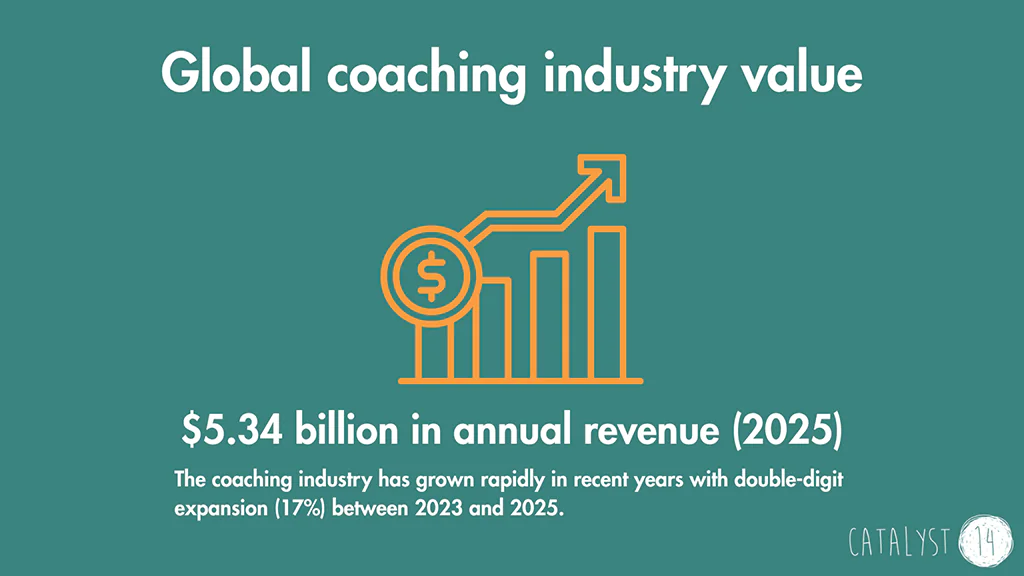
- The global coaching industry generated approximately $5.34 billion in annual revenue (2025), according to the latest International Coaching Federation Global Coaching Study — the most widely cited benchmark for the sector. (Source: ICF.)
- Industry revenue grew by roughly 17% between 2023 and 2025, indicating strong recent momentum. (Source: ICF.)
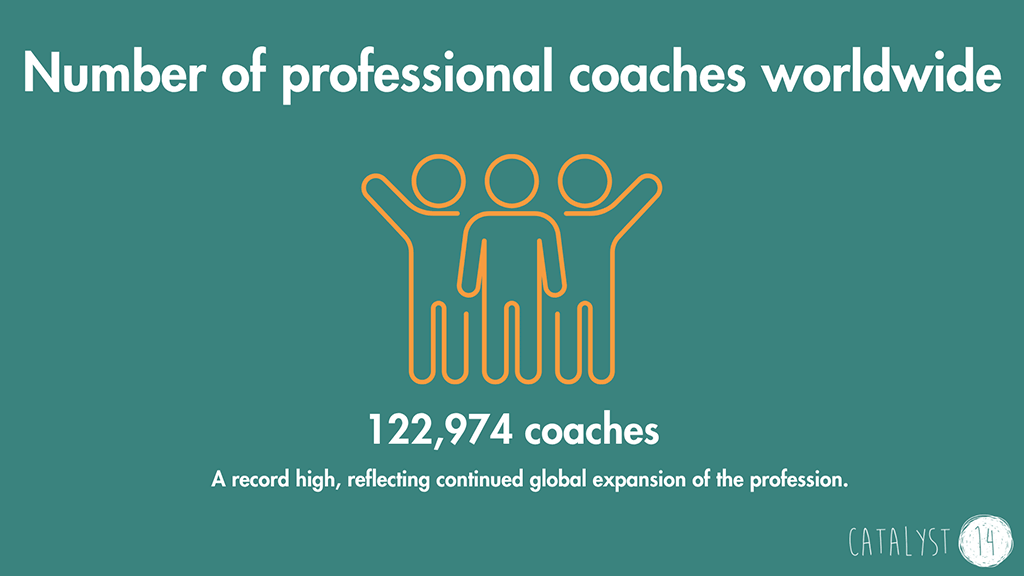
- There are currently around 122,974 professional coaches worldwide, representing a record high and continued expansion of the profession globally. (Source: ICF.)
- North America remains the largest coaching market globally, generating close to $2.9 billion annually, followed by Western Europe as the second-largest region.
- However, the fastest expansion is now taking place in emerging regions such as Asia, Eastern Europe, and the Middle East & Africa, signalling a shift toward a more globally distributed coaching profession. (Source: ICF.)
How fast is the coaching industry growing?
- The global coaching industry is growing at an estimated compound annual growth rate (CAGR) of around 6–7%, reflecting steady expansion across professional coaching services. (Source: Mordor Intelligence.)
- More recent data shows continued momentum, with global coaching revenue increasing by approximately 17% between 2023 and 2025, indicating sustained demand across both corporate and individual markets. (Source: ICF.)
- The executive coaching and leadership development segment is projected to grow at 9%+ annually through 2031. (Source: Mordor Intelligence.)
- More than 50% of coaching engagements are sponsored by organisations, highlighting the shift toward corporate demand. (Source: ICF.)
- Key drivers of growth include:
- Increasing investment in leadership development
- Greater focus on employee wellbeing and resilience
- The need to navigate organisational complexity and change
- The shift toward more personalised development approaches
What are the biggest trends in the coaching industry?
- One of the most significant shifts is the rise of internal coaching within organisations, with companies increasingly building in-house coaching capability rather than relying solely on external providers. (Source: Globe News Wire.)
- Group and team coaching are becoming more common as organisations seek more scalable and cost-effective development models. (Source: Harvard Business School.)
- Coaching delivery is increasingly digital and hybrid, with remote coaching, virtual platforms and AI-supported tools becoming a standard part of how coaching is delivered at scale. (Source:Association for Talent Development.)
- Coaching is becoming more closely integrated with leadership development and organisational strategy, rather than being used as a standalone intervention. (Source: ICF.)
- More broadly, coaching is evolving toward data-informed and AI-augmented approaches, with organisations using technology to scale coaching while maintaining human-led insight and reflection. (Source: Forbes.)
How many professional coaches are there worldwide?
- There are approximately 123,000 professional coach practitioners worldwide, according to the latest International Coaching Federation (ICF) Global Coaching Study. (Source: ICF.)
- The number of professional coaches has grown steadily in recent years, with double-digit percentage increases since the early 2020s, reflecting rising demand for coaching across organisations and individuals. (Source: ICF.)
- North America and Western Europe account for the largest share of professional coaches globally, with more mature coaching markets and higher levels of corporate adoption.(Source: ICF.)
- At the same time, the fastest growth in coach numbers is occurring in regions such as Asia, Eastern Europe, and the Middle East & Africa, indicating a continued globalisation of the profession. (Source: ICF.)
- Estimates of the total number of “coaches” can vary significantly depending on how the term is defined — with broader figures sometimes including part-time, uncredentialed or adjacent roles — whereas ICF data focuses specifically on professional coaching practitioners operating within recognised standards and frameworks. (Source: Business Wire.)
How much do coaches earn?
- Globally, coaches earn a median annual income of approximately $52,800, according to the latest industry benchmarking data. (Source: ICF.)
- In the United States, salary data for coaching professionals suggests average earnings of around $70,000–$75,000 per year, with higher earnings typically seen in executive and leadership coaching roles. (Source: Glassdoor.)
- Coaching fees vary significantly by niche, with typical rates ranging from $100 to $500+ per session, and executive coaching commanding the highest fees in corporate environments. (Source: Harvard Business Review.)
- Executive and leadership coaches tend to earn the most, with experienced practitioners often earning $100,000+ annually, particularly when working with organisational clients. (Source: Payscale.)
Are coaching earnings increasing?
- Coaching earnings are rising in line with industry growth, with the global coaching market expanding at approximately 6–7% annually. (Source: Mordor Intelligence.)
- Higher-value segments such as executive and leadership coaching continue to command premium fees, with many practitioners charging $200–$500+ per session in corporate contexts. (Source: Harvard Business Review.)
- Corporate investment in leadership and coaching-related programmes continues to expand, with the executive coaching and leadership development market projected to grow at over 9% annually through 2031. (Source: Mordor Intelligence.)
- In the UK, executive and leadership coaching rates typically range from £200 to £500+ per hour, with highly experienced or specialist coaches charging significantly more. (Source: Mary Taylor & Associates.)
- However, income growth is uneven, with many early-stage or part-time coaches earning significantly less while building experience and client relationships. (Source: ICF.)
How big is the executive coaching market?
- The executive coaching development market is estimated to exceed $100 billion globally, forming part of the broader $350 billion+ leadership development market, and reflecting strong organisational demand for personalised, high-impact leadership support. (Source: Deloitte and Mordor Intelligence.)
- Executive coaching commands premium pricing within the broader coaching industry, with organisations allocating dedicated budgets for senior leadership development. (Source: Harvard Business Review.)
- In large organisations, leadership development (including coaching) represents one of the largest areas of L&D investment, reflecting its strategic importance
- (Source: McKinsey & Company.)
How widely is executive coaching used in organisations?
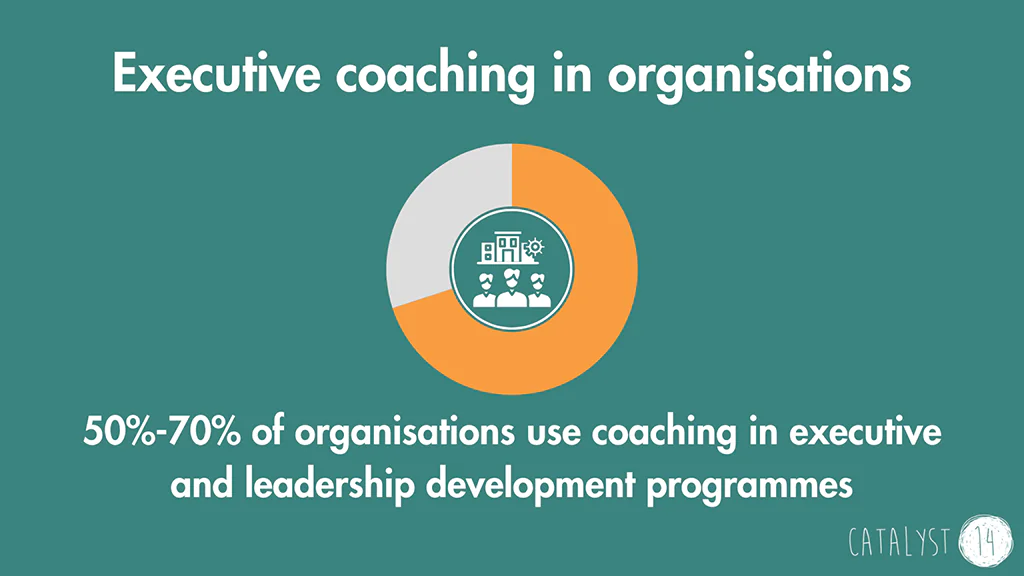
- Between 50% and 70% of organisations report using coaching in leadership development programmes. (Source: Henley Business School.)
- Coaching is most commonly used at senior leadership level, with organisations prioritising executive coaching for high-impact roles and critical leadership transitions. (Source: CIPD.)
- At C-suite level, coaching is often used as a standard development tool, particularly for:
- new executive appointments
- leadership transitions
- organisational change initiatives (Source: Harvard Business Review.)
- Over 50% of coaching engagements are employer-sponsored, highlighting the shift toward organisational demand. (Source: ICF.)
How effective is executive coaching?
- Executive coaching has been shown to improve individual performance, communication and leadership effectiveness, particularly in complex organisational environments. (Source: McKinsey.)
- Research indicates that coaching can significantly enhance leadership effectiveness, particularly in areas such as emotional intelligence, self-awareness and decision-making. (Source: CIPD.)
- Coaching has also been shown to improve decision-making quality, helping leaders navigate complexity and ambiguity more effectively. (Source: CCL.)
- Many organisations report measurable benefits in team performance and organisational outcomes as a result of executive coaching interventions. (Source: Association for Talent Development.)
What challenges does executive coaching address?
- Executive coaching is widely used to help leaders manage complexity, rapid change and increased responsibility, particularly in senior roles. (Source: Center for Creative Leadership.)
- A key focus of coaching is behavioural change, particularly in areas such as leadership style, communication and decision-making under pressure. (Source: CIPD.)
- Coaching plays a critical role in leadership transitions, helping executives adapt to broader organisational impact and expectations. (Source: Harvard Business Review.)
- It is also used to address stress and burnout in leadership roles, which remain significant organisational challenges. (Source: McKinsey.)
How big is the leadership coaching and development market?
- Global spending on leadership development — which includes coaching — now exceeds $366 billion annually, highlighting the scale of investment organisations are making in leadership capability. (Source: Exec.)
- Coaching is an increasingly important component of leadership development, with organisations shifting away from traditional training toward more continuous, personalised and experiential learning approaches. (Source: Deloitte.)
- The executive coaching and leadership development market is projected to grow at over 9% annually through 2031, indicating strong long-term demand. (Source: Mordor Intelligence.)
- Leadership development remains a top priority for organisations globally, consistently ranking among the most important capability gaps in workforce research. (Source: McKinsey & Company.)
How effective is leadership coaching?
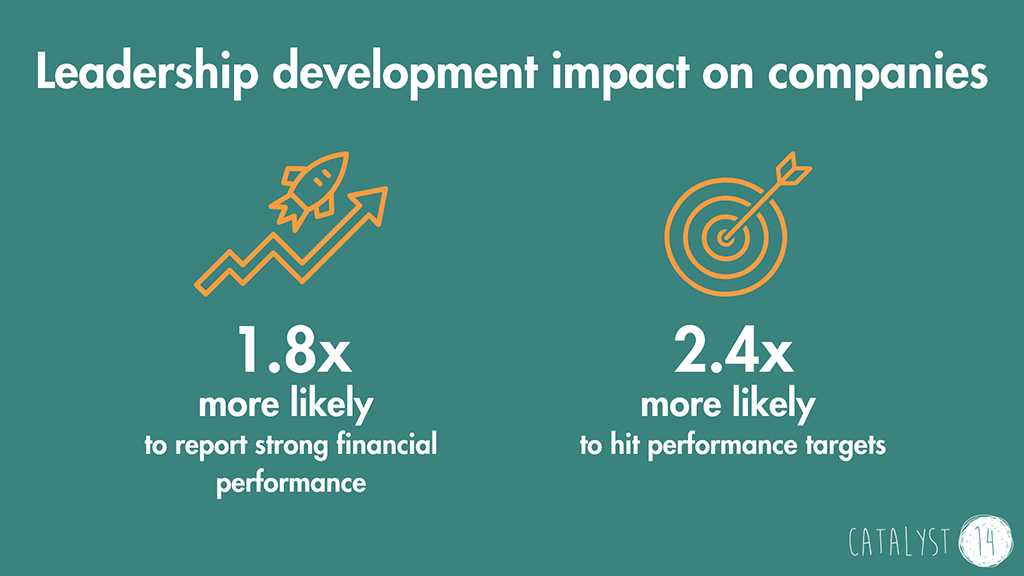
- Companies that invest in employee development (including leadership coaching) are 1.8× more likely to report strong financial performance. (Source: Deloitte.)
- Coaching also supports employee retention, with development opportunities playing a central role in keeping staff engaged — LinkedIn research consistently shows that investing in learning is one of the most effective ways to retain talent, with development cited as the top retention strategy by organisations. (Source: LinkedIn Workplace Learning Report.)
- Coaching is particularly effective in developing core leadership capabilities such as communication, emotional intelligence and decision-making. (Source: CCL.)
How does leadership coaching impact organisations?
- Organisations with strong leadership development practices are 2.4× more likely to hit their performance targets, underlining the organisational impact of leadership capability. (Source:McKinsey & Company.)
- Coaching-based leadership approaches improve alignment, communication and decision-making, contributing to stronger overall organisational performance. (Source: LinkedIn Learning.)
- Employees are significantly more likely to stay in organisations that invest in their development, with learning and growth cited as a top retention driver globally. (Source: LinkedIn Learning.)
- Leadership coaching helps build more adaptive and resilient organisations, particularly in environments characterised by rapid change and complexity. (Source: Harvard Business Review.)
Related resource: Leader as Coach training
How widely is internal coaching used in organisations?
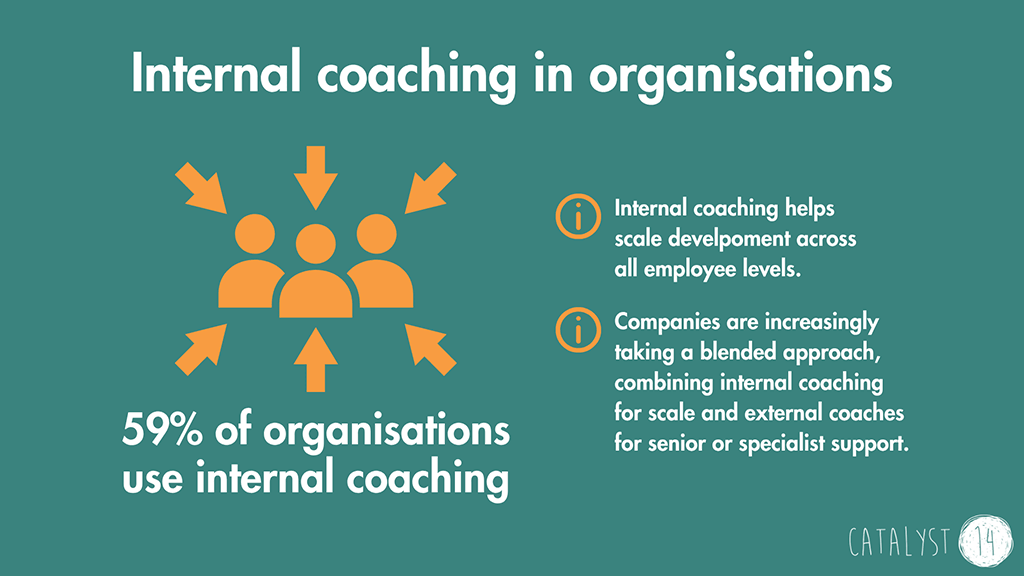
- Around 59% of organisations use internal coaching as part of their learning and development strategy, reflecting widespread adoption.
(Source: CIPD.) - Over 70% of organisations now use coaching in some form, with internal coaching playing a key role in scaling development beyond senior leaders. (Source: ICF.)
- Organisations are increasingly adopting blended coaching models (internal + external), allowing them to scale development while still accessing specialist expertise. (Source: ICF.)
- Internal development approaches — including coaching — are becoming more important as organisations shift toward scalable, continuous learning embedded in the flow of work, rather than relying on one-off training interventions. (Source: Deloitte.)
What are the benefits of internal coaching?
- Internal coaching can significantly reduce development costs, providing a more scalable alternative to external coaching at scale. (Source: ICF.)
- It enables organisations to extend coaching to broader employee populations, rather than limiting it to senior leadership. (Source: LinkedIn Learning.)
- Organisations that embed coaching into leadership practices are more likely to develop strong learning cultures and continuous development behaviours.
(Source: CIPD.) - Internal coaches bring contextual understanding of the organisation, enabling more relevant and aligned development support. (Source: ICF.)
How are organisations building internal coaching capability?
- Organisations are increasingly training managers in coaching-based leadership, enabling development to happen through everyday conversations rather than formal programmes alone. (Source: Deloitte.)
- Many organisations establish internal coaching networks or communities of practice, helping to scale coaching capability across teams. (Source: CIPD.)
- Coaching is being embedded into leadership frameworks and performance expectations, with managers expected to demonstrate coaching capability as part of their role. (Source: McKinsey.)
- A blended approach is common, with organisations combining internal coaching for scale and external coaches for senior or specialist support. (Source: EY.)
How common is group coaching?
- Group coaching is increasingly used as part of leadership development programmes, particularly for mid-level and emerging leaders. (Source: Harvard Business review.)
- Organisations are adopting group coaching as a scalable alternative to one-to-one coaching, enabling development across larger populations. (Source: Deloitte.)
- Group coaching is now widely used in contexts such as
- leadership development cohorts
- high-potential programmes
- cross-functional team development (Source: CIPD.)
- The rise of virtual learning has accelerated adoption, with organisations increasingly delivering group coaching remotely across geographies. (Source: LinkedIn Learning.)
What impact does group coaching have?
- Group coaching enhances learning outcomes by combining coaching with peer learning and shared reflection, reinforcing behaviour change. (Source: Harvard Business Review.)
- It supports collective problem-solving and knowledge sharing, allowing participants to learn from diverse perspectives. (Source: CCL.)
- Research suggests group coaching can support behaviour change by providing a supportive environment for action, reflection and new perspectives. (Source: PsycNet.)
- It can also strengthen connection and collaboration between participants, helping teams improve communication, trust and shared understanding. (Source: International Journal of Evidence Based Coaching and Mentoring.)
Why are organisations investing more in group coaching?
- Group coaching is more cost-efficient, allowing organisations to support multiple employees simultaneously at a lower cost per participant. (Source: ICF.)
- It enables organisations to scale coaching beyond senior leadership, making development accessible across broader employee populations. (Source: Harvard Business School.)
- Group coaching supports cultural alignment, helping to embed shared behaviours, values and ways of working across teams. (Source: CIPD.)
- It aligns well with modern L&D approaches that emphasise collaborative, social and experiential learning, rather than purely individual development. (Source: LinkedIn Learning.)
How common is team coaching?
- Team coaching is increasingly used in organisations, particularly within leadership and cross-functional teams, where alignment and collective performance are critical. (Source: CIPD.)
- Over 80% of organisations use coaching in some form, with growing investment in team and group-based approaches beyond one-to-one coaching. (Source: ICF.)
- Team coaching is widely used in leadership development, transformation and change initiatives, particularly where organisations need to improve collaboration and execution.
(Source: Harvard Business Review.) - Research consistently shows that team effectiveness is a primary driver of organisational performance, reinforcing the importance of developing teams — not just individuals. (Source: McKinsey & Company.)
What impact does team coaching have?
- Team coaching improves performance by strengthening clarity around goals, roles and accountability, which are key drivers of effective teams. (Source: McKinsey & Company.)
- It enhances alignment and shared understanding, helping teams operate more cohesively and execute more effectively.
(Source: ICF.) - Research from Google’s Project Aristotle found that psychological safety is the most important factor in high-performing teams, supporting open communication and collaboration. (Source: Google.)
- Team coaching supports stronger decision-making and reflective practices, improving how teams communicate and solve problems collectively. (Source: International Journal of Evidence Based Coaching and Mentoring.)
How does team coaching affect organisational performance?
- Organisations with effective teams are significantly more likely to deliver strong performance outcomes, particularly in execution and productivity (Source: McKinsey & Company.)
- Team coaching supports innovation and adaptability, with collaborative learning approaches playing a key role in helping organisations respond to change. (Source: LinkedIn Learning.)
- Psychological safety — a core focus of team coaching — has been identified as the number one predictor of team effectiveness, enabling better contribution, risk-taking and idea generation. (Source: Google.)
- By improving how teams align, communicate and make decisions, coaching helps organisations operate more effectively at scale. (Source: McKinsey & Company.)
What ROI does coaching deliver?
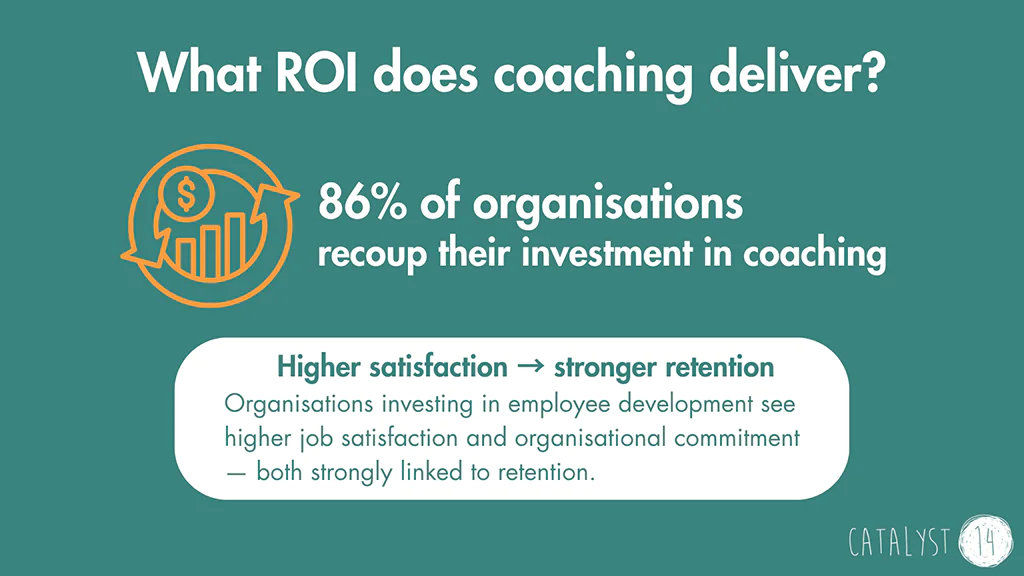
- 86% of organisations report recouping their investment in coaching, with many achieving a positive return. (Source: ICF.)
- Coaching can deliver substantial financial returns, with studies reporting ROI of up to 7× the initial investment, particularly in executive coaching. (Source: ICF.)
- Organisations that invest in people development (including coaching) are 1.8× more likely to report strong financial performance, highlighting its broader business impact. (Source: Deloitte.)
- Beyond financial return, coaching is associated with measurable improvements in organisational outcomes. A meta-analysis published in the Institute of Coaching found that coaching has significant positive effects on performance, skills and wellbeing, all of which contribute to business performance. (Source: Institute of Coaching.)
How does coaching impact employee performance?
- Around 70% of individuals who receive coaching report improved work performance, including gains in productivity and effectiveness. (Source: ICF.)
- It also supports measurable improvements in skills and capabilities. The same research reports that 73% of individuals experienced improved relationships and 72% improved communication skills, both of which are closely linked to on-the-job performance. (Source: ICF.)
- A meta-analysis of workplace coaching studies found moderate-to-strong effects on performance and goal attainment (effect sizes ~0.4–0.7), indicating meaningful behavioural change. (Source: Institute of Coaching.)
- Employees who receive regular feedback and coaching are significantly more engaged and more likely to perform at higher levels. (Source:Gallup.)
How does coaching affect employee wellbeing?
- Coaching has been shown to deliver moderate positive effects on wellbeing (effect size ≈ 0.46), including improvements in resilience and coping. (Source: Institute of Coaching.)
- Research published in Frontiers in Psychology highlights coaching’s role in reducing stress and improving resilience, particularly in high-pressure work environments. (Source: Frontiers in Psychology.)
- A controlled study found that coaching leads to statistically significant improvements in self-efficacy and psychological wellbeing (p < 0.001). (Source: International Journal of Evidence Based Coaching and Mentoring.)
- Around 80% of individuals report increased self-confidence following coaching, a key indicator of improved wellbeing. (Source: ICF.)
How does coaching impact retention and engagement?
- Lack of development opportunities is one of the top reasons employees leave organisations, with learning and growth consistently ranked as the leading retention driver. (Source:LinkedIn Learning.)
- Coaching-based leadership is associated with higher employee engagement, particularly when managers actively support development. (Source: Gallup.)
- Organisations that invest in employee development see higher job satisfaction and organisational commitment, both strongly linked to retention. (Source: CIPD.)
- Research from MIT shows that workplace culture — including development, feedback and support — is a strong predictor of employee retention, with poor culture significantly increasing attrition risk. (Source: Sloan Review.)
How widely is coaching used in organisations globally?
- Over 80% of organisations use coaching in some form, reflecting its widespread adoption in leadership and employee development. (Source: ICF.)
- The global coaching market itself has grown significantly, indicating rising organisational demand. The same research estimates the global coaching industry at over $4.5 billion, with continued growth driven by corporate adoption (Source: ICF.)
- Organisations are shifting toward continuous, personalised learning models, with coaching playing a central role in development delivered “in the flow of work”. (Source: LinkedIn Learning.)
How is coaching being integrated into leadership development?
- Coaching is increasingly embedded into leadership roles themselves. Research from LinkedIn Learning shows that leaders and managers account for a growing share of learning and development investment, with organisations prioritising ongoing, in-role development rather than one-off training. (Source:Linkedin Learning.)
- Organisations are equipping managers with coaching capabilities at scale. Research from McKinsey & Company highlights that companies shifting toward more agile and effective operating models place strong emphasis on leaders acting as coaches — a key factor in improving team performance and adaptability. (Source:McKinsey & Company.)
- Coaching is also being integrated into continuous learning strategies. According to LinkedIn Learning, 89% of L&D professionals say proactively building employee skills is critical to navigating the future of work, driving the adoption of personalised, ongoing development approaches such as coaching. (Source:Linkedin Learning.)
What industries use coaching the most?
- Coaching adoption is highest in corporate environments, particularly in sectors with high leadership demands such as business services, finance and technology. (Source:ICF.)
- Coaching adoption is strongest in industries facing rapid change or high performance pressure, including:
- technology
- financial services
- healthcare
- professional services
- manufacturing
(Source: McKinsey.)
What are the key coaching statistics in the UK?
- The UK is one of the largest coaching markets globally. According to the International Coaching Federation, the UK accounts for a significant share of the European coaching market, which generated over $1.2 billion in annual revenue, with Europe representing one of the largest regional coaching markets worldwide. (Source: ICF.)
- The UK has a substantial coaching workforce. The same research estimates that Western Europe has over 20,000 professional coaches, with the UK representing one of the largest national concentrations within that total. (Source: ICF.)
- Coaching demand in the UK is strongly driven by organisations. Surveys of employers by CIPD show that over 60% of organisations use coaching or mentoring as part of their development strategy, making it one of the most widely used L&D approaches. (Source: CIPD.)
- The UK also plays a leading role in professionalising coaching. Bodies such as EMCC Global and others have helped establish widely adopted accreditation frameworks and standards, supporting the continued growth and maturity of the market. (Source: EMCC Global.)
How widely is coaching used in UK organisations?
- Coaching is used by a large majority of UK organisations. Survey data shows that around 70–75% of UK employers use coaching or mentoring, making it one of the most widely adopted learning and development approaches. (Source: Training Zone.)
- Coaching is increasingly embedded in leadership development. More recent data indicates that around 68% of UK organisations include coaching or mentoring in leadership programmes, particularly for managers and high-potential employees. (Source: Coaching Education.)
- Investment in coaching and mentoring is continuing to grow. Recent UK employer data suggests that 47% of organisations are actively investing in coaching and mentoring as part of talent and retention strategies. (Source: People Management.)
- Coaching is also shifting from a specialist intervention to a mainstream management capability. In practice, this is reflected in the growing expectation that managers adopt coaching behaviours — particularly important given that 82% of new UK managers receive no formal training before taking on leadership roles, increasing demand for coaching-based approaches. (Source: Investors in People.)
What trends will shape coaching over the next 5 years?
- Coaching-based leadership is becoming the norm. Managers are increasingly expected to coach, not just direct, with research from Gartner highlighting the shift toward continuous feedback, development and employee support as core management responsibilities. (Source: Gartner.)
- Coaching is scaling beyond senior leaders. Organisations are expanding access through group coaching, internal coaching and digital delivery — moving from elite intervention to organisation-wide capability. This aligns with broader shifts toward continuous learning highlighted by LinkedIn Learning. (Source: LinkedIn Learning.)
- AI is augmenting coaching — but brings real, coaching-specific risks. A 2025 study of coaching professionals found that while AI is widely used for research, content and administrative support, its role in relational, interpretive and behavioural coaching remains limited, with concerns around ethics, data privacy and over-reliance on automated insights. (Source: J Haase.)
- Data suggests 75% of high-performing coaching businesses now use AI tools, yet 45% say AI augments rather than replaces human coaching, reinforcing a hybrid future. (Source: Delenta.)
- Coaching is becoming more measurable and integrated. Research from LinkedIn Learning shows that organisations are increasingly embedding development into broader talent strategies, with a strong focus on linking learning (including coaching) to business outcomes. (Source: LinkedIn Learning.)
You can learn more about Catalyst 14’s coach training services here
About the author
Matt Walsh is the Head of Content at Ecommercetrix. Having gained a degree in Literature and Philosophy from Trinity College Dublin and an MA in International Relations from Dublin City University, Matt worked in the marketing world for a decade before taking up an education role — teaching languages, literature and creative writing in London.
Matt is an holds a certificate in digital marketing from DMI (Digital Marketing Institute), along with a postgraduate certificate in Design Thinking, Innovation, Entrepreneurship and Creative Thinking from Trinity College Dublin.
Get free coaching and mindfulness resources
Join our community for free and get a host of essential resources, including an e-book on becoming a professional coach, access to our coaching webinars, a mindfulness e-kit and much more.