

Catalyst 14 Blog
Below you’ll find all the latest blog posts from Catalyst 14. To ensure you don’t miss any posts, click here to subscribe to updates.
Search our blog
Latest posts

In this post we discuss the steps a coachee needs to take in order to get the biggest impact from their coaching experience.

10 must-read tips on how to run a successful online coaching session.

In this post we look at the concept of ‘following your bliss’: listening to your heart, your truth and trusting the deep impulse within you to live a life that truly makes you feel alive.
Browse all our posts by topic
- The coach’s presence
- The coaching relationship
- Managing the coaching programme
- Coaching models
- Using creative methods within the coaching session
- Coaching topics
- Executive coaching
- Coaching outdoors
- Group and team coaching
- Coach CPD
- Internal coaching
- Leader as coach
- Mindfulness
- Personal leadership
- Reflective writing and journaling
- About Catalyst 14
The coach’s presence

In this post, we explain the value of listening in coaching and how doing this right can bring about significant change for a coachee.

We explore why giving advice may have become a hardwired conversational habit — and what we can do to shift from “doing” to “being” in a coaching conversation.

An exploration of how the ‘I’m OK, You’re OK’ approach can help in difficult coaching contexts.

Many are familiar with the “fight, flight and freeze” reactive patterns, but there’s also the “fawn” response to consider. In this post, we shed light on its origins and implications.

Turning down the heat — understanding reactive tendencies and how they affect coaching conversations
In this post, we look at how you can use an awareness of ‘reactive tendencies’ to handle difficult conversations successfully.

In this post we discuss the positive impact that practising an attitude of gratitude can bring to your coaching — and to your life as a coach.

In this post we discuss our use of transformational coaching – working with a client in a way that moves beyond the surface of the presenting topic.

Insights on how we can realise when our inner critic is at work — and ways to use this to our advantage.

In view of our own and clients’ current contexts, we want to offer you a free grounding exercise to support you being present in how you are showing up in your work and life.

Research consistently shows that we are heavily influenced in ways that are completely hidden from our conscious mind in how we view and evaluate both others and ourselves. How does ‘unconscious bias’ this affect coaching?
The coaching relationship

In this post, Damion Wonfor explores two core concepts from the Person-Centred Approach, a psychological modality developed by Carl Rogers and a key influence on the development of coaching in business.

In this post, Paul Golding takes us on a search to find the key ingredients for coaching chemistry.

More and more, our coaching clients come to us in a state of overwhelm. In this post, we explain our approach to supporting them.

Misunderstandings and disconnections, known as “ruptures,” are almost inevitable in coaching. In this post we discuss how they can be used to enhance the coaching relationship.
In this post we discuss how coaches can avoid the negative impact of dual relationships.

In this post, we explore the online disinhibition effect and how it affects the coaching relationship.

In this post, we outline the components of a great coaching relationship.
Managing the coaching programme
10 must-read tips on how to run a successful online coaching session.

In this blog post, we explore what happens when a coachee poses the question “Is this therapy?”

In this post, we highlight how professional coaches can evaluate and improve their coaching practice over time.

In this post Monica Ross explores the beginnings, middles and endings of a coaching journey.

In this post we discuss how note-taking can affect a coaching session.

In this post we look at what happens when emotions arise within the coaching session – and how to manage them.

In this post, we discuss how you can identify and deal with situations where the boundaries between coaching and therapy start to overlap.
Coaching models, skills, techniques and approaches

In this post, Nisheeta Shah explores the power of stories in the coaching relationship.

Janey Bell discusses how Byron Katie’s inquiry method can help coaches create clarity about beliefs and assumptions.

In this post we explore the power and place of rules in coaching, and how breaking them the right way can unlock potential.

A look at how Ai — Appreciative Inquiry, not Artificial Intelligence! — can be transformative in coaching conversations.

In this post we discuss how the Japanese concept of Kaizen can support and improve your coaching work.

In this post we look at the use of music in coaching. Can it help develop coaching conversations and improve the coaching relationship?

We dive into 7 ways that drawing and visuals can support coaches in their work.

In this post we explore the ‘aha’ moments that a traditional Japanese concept, ‘Ma,’ can provide in coaching.
Using creative methods within the coaching session

A look at the benefits that ‘clean language’ can bring to the coaching relationship.

In this blog post, we consider the impact on the coaching space that ‘compassionate listening’ can create.

Monica Ross explores what it means to work in a more embodied way as a coach and discusses how one might begin to support clients through greater use of self as instrument.

Based on our experiences as coach trainers, along with real-life experiences from coaches that we have trained, we’ll explore how you can unlearn, and then relearn, being directive in a coaching conversation.

Asking a question when we don’t really mean to inquire is common mismatch between what we are trying to communicate and what we actually say. In this post, Liz Palmer takes a look at how to be clearer and avoid the danger of being misunderstood.

In this post, Liz Palmer discusses how changing our ‘voice’ brings the flexibility to vary our contribution — and achieve improved outcomes.
Coaching topics
In this post we discuss the steps a coachee needs to take in order to get the biggest impact from their coaching experience.
In this post we look at the concept of ‘following your bliss’: listening to your heart, your truth and trusting the deep impulse within you to live a life that truly makes you feel alive.

In this post, we explore how a sense of wonder can help invite new thinking and new ideas.

In this post we discuss how embracing impermanence can lead to coaches developing greater resilience and peace of mind.

In this post, we explore how the change paradox could be a helpful concept for executive coaches to help unlock change.

In this post, we share some some thoughts on how the psychology of imperfection — Wabi-Sabi can enhance our coaching practice.

In this post, we explore the impact on organisations of failed transitions; what makes the transition to a senior leadership position particularly challenging; and why and how coaching (and specifically group coaching), could be valuable.
Executive coaching

In this post, we share a comprehensive set of coaching statistics — facts, figures, and infographics that demonstrate the value and power of coaching.

In this post we revisit coaching fundamentals and look at why coaching practice can be as important as coaching knowledge.
Coaching outdoors

Welcome to our winter coaching walk, the next in our series of blog posts about using the natural seasonal shifts as prompts for our thinking.

Juliet Flynn invites you to kick through some leaves with her and wander and wonder, in search of Autumnal prompts for self-coaching.

Time outdoors steadies, stills and resources us in our work. In this post, we explain why.

In this post, Fi Macmillan outlines some key benefits of systemic coaching in nature.
Group and team coaching

In this post, we discuss how the change in communication patterns from serial monologues to real dialogue is beneficial for everyone.
Coach CPD

Access the recent masterclass on Leader Performance Coaching with Myles Downey to celebrate the 5th birthday of Catalyst 14.
Internal coaching

The intention of this post — the third in a three part series about internal coaching — is to support our clients with establishing, maintaining and evolving a successful internal coaching provision.

The second part in a series of posts on how to create a strong internal coaching provision.

This blog post — the first of three on the topic — will explore the five key ingredients to consider when setting up internal coaching programmes.

In this post, we highlight some simple preparatory elements that can support impactful coaching programmes.

In this post we explore the key questions you need to answer before committing to internal coaching.
Leader as coach

We share 10 characteristics of an impactful leader as coach – one who will inspire and guide their team members towards achieving their goals.
Mindfulness

To support you in the run up to Christmas, here are our recommendations for some mindful activities that you can build into your day.

In this post, we explore how focusing on the positive can lead to greater happiness and build a greater capacity to deal with adversity.

In this post, we discuss the concept of burnout and explore the key ways that you can avoid it.

In a year that has been full of threats, triggers and challenges, how might you pause and really take in the good?

Catalyst 14 will be supporting World Mental Health Day by offering you the chance to join a free guided mindfulness practice.

In this post, we look at nine key principles of mindfulness practice.

In this post we look at ways you can make space for reflection and practise self-care; we also explore the benefits of doing so.

Damion Wonfor and Monica Ross discuss the personal and professional benefits of attending a retreat.

In this blog post we look at self-compassion as an important way of building resilience, and share an audio exercise to help you practice it.

When we are lost in our negative thoughts, leaders’ ‘buttons’ often get pushed and they start to react – or over-react – before being consciously aware of it. In this post we discuss how attaining a habit of pausing during the day provides us with the opportunity to wake up from autopilot and develop a more conscious style of leadership.

In this post we define mindfulness, explore some common myths associated with it and give some practical tips on how to introduce mindfulness to your everyday life.

In this blog post, we discuss some key things to consider when setting up a formal mindfulness practice, including location, posture and habit formation.

In this article we discuss how you can snap out of automatic pilot, and embed a mindfulness practice in your daily life.
Personal leadership

In this post, we discuss how conscious leadership begins with noticing the inner scripts behind our daily decisions.

One of the impacts that Covid-19 is having is that we all need to operate in an uncertain environment. In this post, Paul Golding looks at ways to be successful in it.

In this post, Tracy May explores one of the most pressing questions that needs to be answered in the COVID-19 era: ‘’What is the task of leadership?’’

If the first week of lockdown has been a bit of a struggle, this post is for you: it discusses what you could have been experiencing — and what could make the next few weeks a bit better.

Ruth Simpson asks an important question in the context of the COVID-19 crisis: where does the need for resilience end and the need to adapt begin?
Reflective writing and journaling

Reflective writing can provide us with a consistent anchor, a grounding and a rich resource to help us navigate difficulties and be with ‘what is.’

How journaling and reflective writing can be strong tools for strengthening and cultivating emotional intelligence capabilities.
About Catalyst 14

Vanessa Rogers interviews Catalyst 14 Founder Damion Wonfor about his experience of coaching.
Vanessa Rogers interviews Catalyst 14 Founder Damion Wonfor about his experience of coaching.
Vanessa Rogers continues her series of interviews with Catalyst 14 Partners, this time asking Boaz Safier about his experience of coaching and his approach to it.
In the first in a series of interviews with Catalyst 14 partners about their views and experiences of coaching, Vanessa Rogers interviews Janey Bell.

In this post Vanessa Rogers shares some common themes that emerged from a series of interviews with past participants on their experience of training with Catalyst 14.
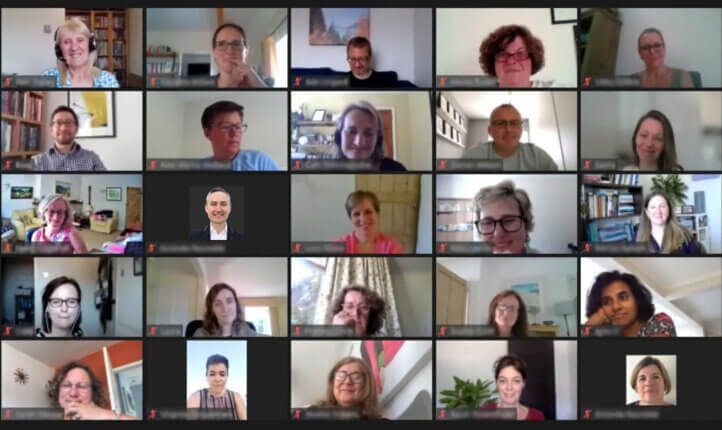
Following a successful 2021 Catalyst 14 Gathering event, we share some of the key learning points from each of the sessions delivered.

In this blog post, Martin Turner — a past participant of our Diploma in Transformational Coaching course — outlines some of his experiences of studying with Catalyst 14.
Partner blog posts by author
You can read blog posts written by individual Catalyst 14 partners using the following links:
Other resources
Get free coaching and mindfulness resources
Join our community for free and get a host of essential resources, including an e-book on becoming a professional coach, access to our coaching webinars, a mindfulness e-kit and much more.